

Real Estate vs Gold and Stocks: A Detailed Investment Comparison
Key Points
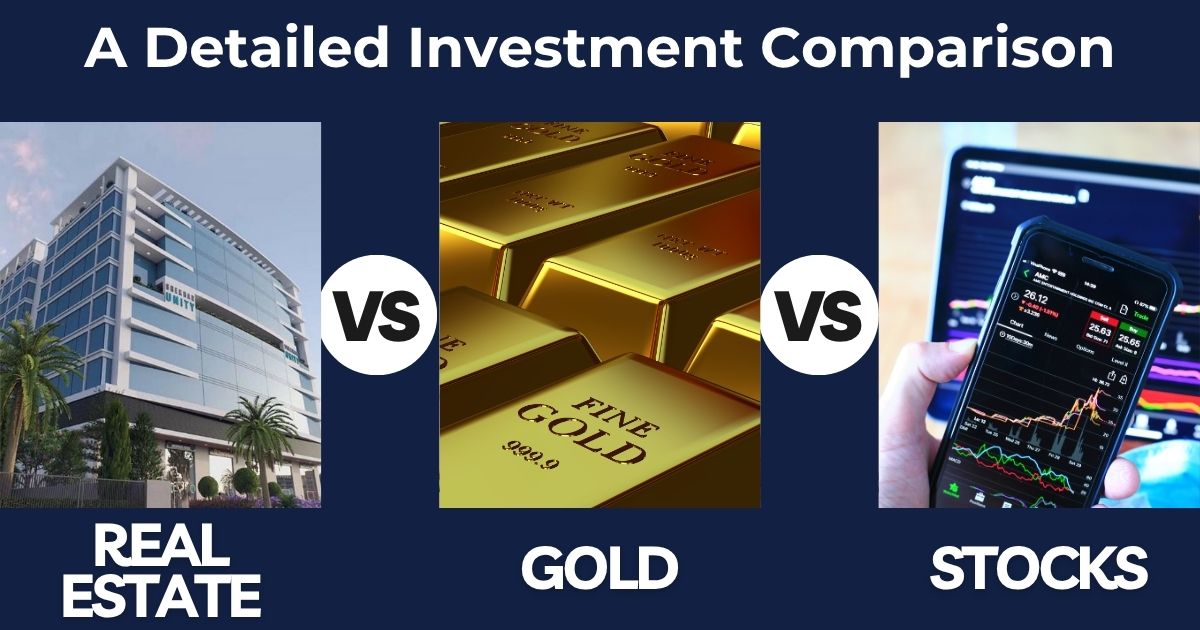
In the world of investments, one common dilemma people face is deciding where to allocate their money for the right mix of returns and security. Real estate, gold and stocks are among the most preferred investment options, each offering distinct advantages and considerations. Understanding how these assets perform can help you make more informed financial decisions aligned with your long-term goals.
Real estate, being a physical asset, involves purchasing property with the expectation of value appreciation over time, either through resale or rental income. It stands apart from comparatively abstract assets like gold and stocks. This comparison aims to highlight the strengths and limitations of real estate while evaluating how it performs alongside gold and equities as part of a broader investment strategy.
As you explore further, you’ll gain clarity on the opportunities, risks, and practical aspects associated with each option, helping you build a more balanced and thoughtful investment approach.
Advantages of Real Estate Investment
Even with fluctuations in home loan interest rates, real estate continues to attract strong buyer sentiment. However, borrowing costs can influence purchasing decisions, making it important to evaluate the benefits carefully.
Here are some of the key advantages of investing in real estate:
Tangible Asset:
Real estate offers ownership of a physical property, providing a sense of stability and security. Unlike stocks or gold, it also has functional value, you can live in it, lease it, or use it for other purposes.
Steady Income:
Rental properties can create a consistent income stream. This helps manage expenses such as EMIs, maintenance and property taxes while generating ongoing returns.
Appreciation Potential:
Over time, property values generally increase, especially in developing cities. Despite short-term fluctuations, real estate has shown steady long-term growth.
Leverage Opportunity:
Through home loans, investors can acquire high-value assets with relatively lower initial investment, which can enhance returns over time.
Tax Benefits:
Deductions on home loan interest, principal repayment and depreciation can reduce the overall tax burden for property owners.
Inflation Hedge:
As the cost of living rises, property values and rental income often increase as well, helping maintain purchasing power.
Real Estate vs Gold
Gold has traditionally been seen as a reliable store of value. Here’s how it compares with real estate:
Tangibility:
Both are physical assets, offering a sense of ownership. However, real estate provides practical usability, unlike gold which mainly serves as a value reserve.
Income Generation:
Real estate can generate rental income, while gold does not provide any regular returns.
Leverage:
Property investments can be financed through loans, whereas gold investments are usually made with full capital upfront.
Diversification:
Both assets can complement each other in a portfolio, gold for stability and real estate for income and growth.
Liquidity:
Gold is easier to buy and sell quickly. Real estate transactions typically require more time and documentation.
Volatility:
Gold prices can fluctuate due to global economic conditions, whereas real estate markets tend to remain comparatively stable over time.
Real Estate vs Stocks
Stocks represent ownership in companies and are traded in financial markets. Here’s how they compare with real estate:
Tangibility:
Real estate is a physical asset, while stocks represent intangible ownership in a business.
Income Generation:
Rental income from property can be relatively stable, whereas stock income depends on dividends and company performance.
Diversification:
Stocks allow broader diversification across industries, while real estate investments are often concentrated in specific locations.
Liquidity:
Stocks can be bought and sold quickly, while real estate transactions require more time to complete.
Management:
Property ownership involves maintenance and management, while stocks are generally passive investments.
Volatility:
Stock markets can experience rapid fluctuations, while real estate usually demonstrates more gradual changes in value.
A Practical Real Estate Opportunity in Indore
In a growing market like Indore, developments such as Sahil Shangrilla present a strong example of modern residential investment.
Located at Talawali Chanda, AB Road, Indore, the project offers a combination of peaceful surroundings and strong connectivity, making it suitable for both residential use and long-term investment.
With easy access to key areas such as Vijay Nagar Square, Bombay Hospital, Manglia Railway Station, AB Bypass Road and Phoenix Citadel Mall, it ensures everyday convenience. Proximity to educational institutions like Laurels International School further enhances its appeal.
The development also features a range of lifestyle amenities including a clubhouse, swimming pool, gymnasium, landscaped gardens, sports courts, children’s play area and community spaces, aligning with the expectations of modern homebuyers.
The Smarter Investment Approach
Among various investment options, real estate stands out as a versatile and dependable asset class. It combines the advantages of physical ownership, consistent income potential, appreciation, leverage and tax efficiency. At the same time, it requires careful planning due to factors like higher entry costs, lower liquidity and ongoing management.
When compared with gold and stocks, real estate offers a balanced mix of stability and utility. While gold provides security and stocks offer liquidity and high-growth potential, real estate delivers long-term value along with practical usability.
Ultimately, the right investment choice depends on your financial goals, risk tolerance, and time horizon. A diversified portfolio that includes real estate, along with other asset classes, can help create a more stable and rewarding financial future.
FAQs about Real Estate vs Gold vs Stocks Investment Comparison
1. Which is a better investment option: real estate, gold, or stocks?
Each option serves a different purpose. Real estate offers stability and income, gold provides security and stocks deliver growth potential. The best choice depends on your financial goals and risk appetite.
2. Does real estate provide better long-term returns?
Real estate has historically shown steady appreciation, especially in developing markets. Combined with rental income, it can deliver reliable long-term returns.
3. Is gold a safe investment compared to property?
Gold is considered safer in terms of liquidity and value preservation, but it does not generate income like real estate does.
4. Are stocks riskier than real estate?
Stocks are generally more volatile and influenced by market conditions. Real estate tends to be more stable but requires higher initial investment.
5. Why is Indore a good place for real estate investment?
Indore offers strong infrastructure growth, affordability, and increasing demand, making it an attractive destination for long-term property investment.
Ready to Make Your
Property Decision?
Schedule a free consultation with our real estate experts today.
